Chariot of Benefit and Happiness
Published on July 14, 2026
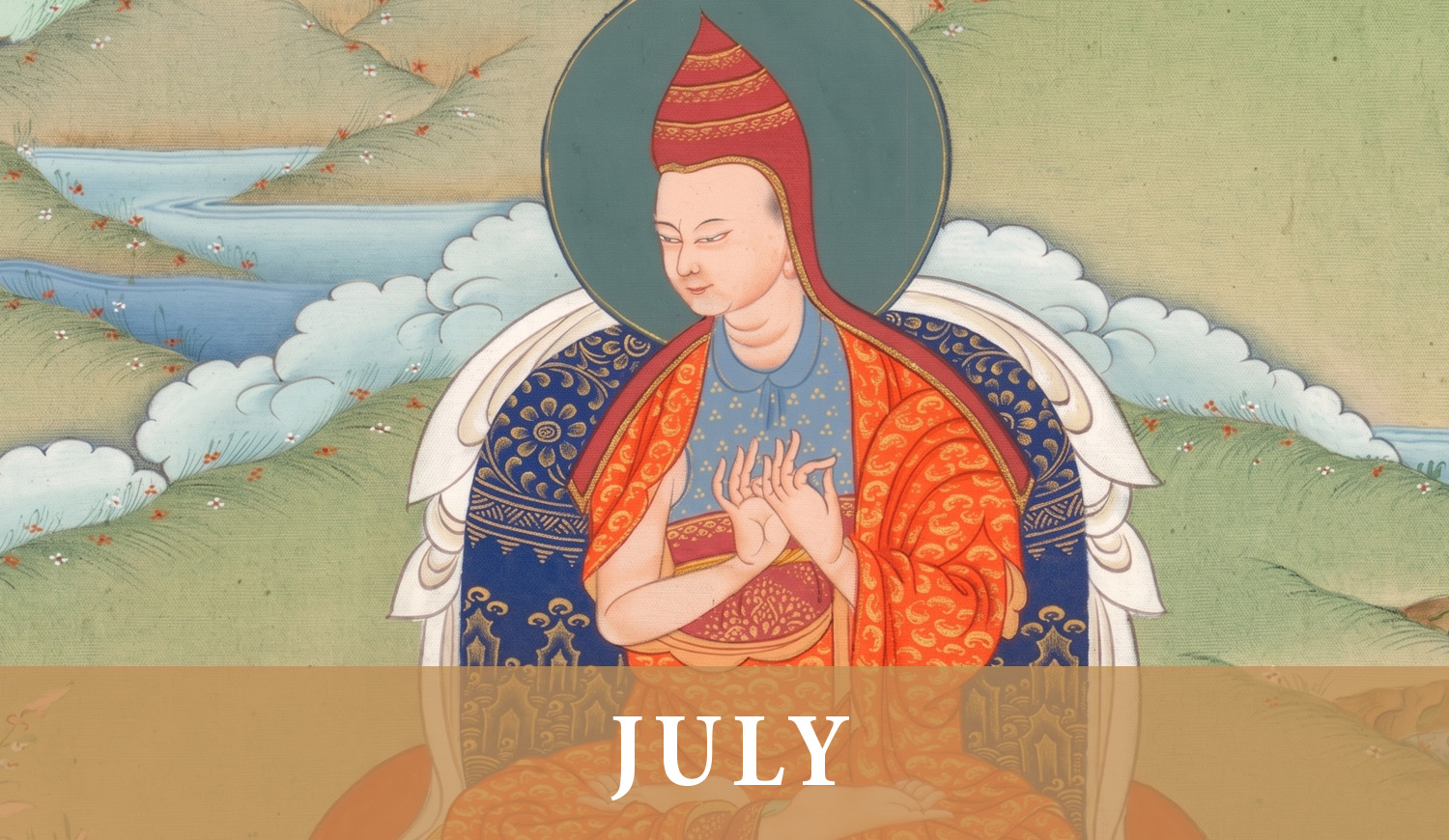
Our July Text of the Month is Chariot of Benefit and Happiness—an experiential song in which Jamyang Khyentse Wangpo distills the essential teachings of the Kadam tradition: the stages of the path, the three scopes of motivation, and Chekawa Yeshe Dorje’s Seven-Point Mind Training.
Khyentse Wangpo composed this text at Radreng Monastery, the first Kadam monastery, during his last visit to Central Tibet in the fall of 1851. In a vision there, he received the Kadam teachings directly from Dromtönpa, Atiśa’s closest disciple, who appeared to him seated beneath a juniper tree surrounded by his disciples. The text flows from this visionary transmission and carries its warmth and directness throughout.
Teaching with Khenpo Choying Dorje
For our July Text of the Month, Khenpo Choying Dorjee taught on Chariot of Benefit and Happiness by Jamyang Khyentse Wangpo—a song that distills the entire path of Atiśa’s Kadam tradition with the naturalness and immediacy of a Tibetan folk song.
Drawing on decades of experience and deep familiarity with Khyentse Wangpo’s writings, Khenpo walked us through the text’s structure and key teachings—the stages of the path, reliance on a qualified teacher, the four great aspects of Atiśa’s Lamrim, and the seven points of mind training, as well as the integration of sūtric and tantric practices. The session also included a rich exchange on the meaning of Rimé, the non-sectarian approach of honoring all authentic lineages.
Consecutive interpretation by Lopön Sonam Jamtsho.
Text of the Month tutorial with Jamie Creek and Zack Beer
July 30 | 3:00 PM UTC
Following Khenpo Choying Dorjee’s Text of the Month teaching on Chariot of Benefit and Happiness, we invite you to join us for a tutorial exploring Jamyang Khyentse Wangpo’s lojong works more broadly.
Lojong, or mind training, is a core practice in Tibetan Buddhism—a set of contemplative methods for shifting our attitude and behavior toward a mindset of awakening. Since its inception in the eleventh century, these teachings have played an important role across all Tibetan traditions.
Khyentse Wangpo, who embodied the nonsectarian Rimé spirit, expressed deep devotion toward the Kadam tradition, from which the lojong teachings initially evolved, and composed several important works in this genre.
The session will be led by our in-house translator Jamie Creek and facilitated by translation team lead Zack Beer.